
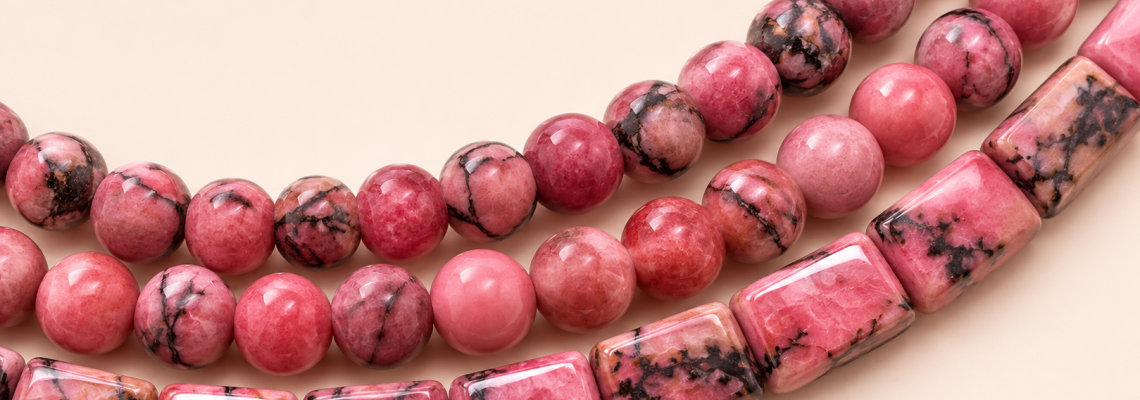
Rhodonite is easy to recognize by its pink tones and dark markings. Some beads are mostly pale pink, while others have more prominent black veins and brown patches. A single strand can give you enough variation to arrange the beads from light to dark or create a bracelet with bold contrasts.
What Is Rhodonite?
Rhodonite is a manganese-bearing mineral that ranges in color from pink to reddish and brownish red. Its name comes from the Greek word rhodon, meaning “rose.” Dark veins and patches are characteristic of rhodonite and are especially noticeable on large, polished beads.
Esoteric Properties and Symbolism of Rhodonite
In modern esoteric practices, rhodonite is associated with compassion, forgiveness, and emotional balance. It is also linked to the heart chakra and chosen for jewelry that symbolizes care for yourself and those close to you.
A piece of rhodonite jewelry can serve as a personal reminder. You might give a rhodonite bracelet as a gesture of support or choose a pendant to mark a new chapter in your life. These meanings come from esoteric beliefs. The stone’s effects on health or emotions have not been scientifically established.
How to Choose Rhodonite Beads
4 × 3 mm — for delicate bracelets, multistrand jewelry, and small accents between larger beads.
8 mm round beads — for a bracelet that shows off the pattern of each bead. Try arranging them in a gradual transition from pale pink to darker shades.
10 mm round beads — for a statement bracelet or the center of a necklace. If you’re making earrings, choose a pair of beads with similar markings and weight.
10 × 5 mm rectangular beads — for geometric designs. Place a few in the center of a bracelet and add smaller round beads on either side.
What to Pair With Rhodonite
Black onyx brings out the dark veins. For a bracelet, try alternating one onyx bead with two rhodonite beads.
White freshwater pearls highlight the pink tones. For a short necklace, string a row of pearls and place three rhodonite beads in the center.
Silver-tone findings keep the focus on the stone’s pattern. For each earring, one distinctive bead and a small metal spacer are enough.
Before stringing the beads, lay them out and see how the pattern changes from one bead to the next. Place the most striking bead in the center and choose the neighboring beads by shade.
Leave a Comment